18 October 2026
Fencing Contractor Melbourne: Best Practices for Local Soil
Presented by @juliusfence-builderbpef338
Melbourne fence jobs look comparable externally. Dig holes, set blog posts, support, connect rails, and tidy up. Once you stand at the website with the shovel in your hand and you can really feel just how the ground acts, you know the actual job is occurring underground. Local dirt problems choose whether a fence looks directly at the first day and likewise behaves like a straight fencing a year later.
I've seen a lot of "great fencings" fall short early, not since the installer did not have initiative, yet because the ground never obtained the respect it was entitled to. If you're hiring a fence company or contrasting fence installers, the very best techniques for regional dirt are the distinction between a fence that holds its shape and one that quietly loosens up, leans, and needs repeat repairs.
Below is exactly how knowledgeable fencing contractors in Melbourne typically come close to dirt, what to look for, and what choices you can ask your fence contractor to justify.
Soil in Melbourne is not one thing
Melbourne's impact covers a mix of seaside influence, creek nation, lava plains in some areas, and land that has been reduced, filled up, or compressed with time. Even within the same residential area, you can hit a couple of different layers as you relocate along the fencing line.
That matters due to the fact that post efficiency is primarily concerning friction and support, not simply the lumber or metal you can see. In softer soils, a blog post can sink a little bit more than expected, and little movements compound over months of weathering and wind. In clay-heavy locations, water retention can create swelling and shrinkage patterns that push posts up and then pull them down again. On made or interrupted ground, the "topsoil" might look penalty until you get to the layer that was formerly utilized for services or landscaping.
A fence contractor Melbourne that does points appropriately will not treat the website like a generic backyard. They deal with the soil like a product they need to create around.
Start with soil practices, not guesswork
The initially best practice is standard, but it's not constantly done. An excellent Fence installer Melbourne group observes how the ground handles actual digging and genuine water.
You don't require a lab to learn a great deal. You can often tell from fast website clues:
- Is the soil crumbly and drains pipes fast, or does it stay damp and heavy?
- Does it cling in portions when you scoop it, or does it collapse into a great mix?
- How deep can you dig prior to the sides begin caving in?
- After current rainfall, do puddles rest, or does the area dry quickly?
Those monitorings shape decisions like post deepness, whether you must utilize concrete, what backfill blend makes sense, and how you manage drainage around the message base.
If a fence company shows up and starts with a one-size-fits-all "typical deepness, standard concrete, standard backfill," you need to at the very least ask concerns. In some cases it functions. Usually, it's simply luck.
The instance for appropriate article depth
In ground conditions where moisture modifications prevail, post deepness matters since it puts the blog post below the zone where the dirt continuously moves. If you establish messages also shallowly, you are properly counting on surface stability. That's where Melbourne weather condition and watering can do their most damage.
The complicated part is that "too shallow" relies on soil kind and local conditions. I've seen messages installed at the exact same depth hold company on one section of a fence line and drift in one more, even if the ground account changed.
A specialist fence contractor will frequently deal with depth as a site-specific choice rather than a taken care of regulation. They will additionally consider fencing elevation and loading. A taller fencing with bigger panels takes even more pressure in wind, and it doesn't take much tilt for the tons to focus near the base.
If you're talking with fence contractors, ask just how they establish deepness on your website. The solution you desire is grounded in soil condition and message loading, not a memorised template.
Concrete: when it aids, when it hurts
Concrete around a fencing message can increase stability by producing a hard "outlet," but it can also create issues if it's done without thinking about water motion and soil interface.
Here are the compromises I've seen play out:
- In very soft or sandy ground, concrete can protect against an article from tottering as dirt compresses.
- In responsive clay, concrete can end up being the inflexible aspect that deals with movement, which often results in cracks in the surrounding backfill and more motion over time.
- If concrete is put and the space between post and soil is not attended to meticulously, water courses can develop, and the base can cycle through wet and completely dry states quicker than you expect.
The "ideal" method depends upon the ground. Some Fence contractors concentrate heavily on concrete, others push for minimal concrete with crafted backfill. The right fence installer will determine based upon soil stability, water drainage, and the expected activity at the blog post base.
If you wish to be practical about it, ask your fence contractor what they're attempting to accomplish with concrete in your dirt. Are they stabilising a soft base? Are they securing the post from comb? Are they enhancing friction? The objective should be clear.
Backfill is not simply dirt
One of one of the most usual shortcuts I see on older fences is that backfill was made with whatever appeared of the opening, in some cases without compaction, in some cases with way too many swellings or organic product. That approach is convenient, however it's not what a message needs.
Good backfill method has to do with:
- providing strong support around the blog post,
- limiting voids that allow the post settle later on,
- promoting drainage as opposed to holding water versus the base.
In numerous soil types, compressed granular material does much better than loosened fill. If you have actually ever before seen a fresh constructed fence after a heavy rainfall, you might see a small sinking at the blog post line once the ground works out. That's usually the dirt and backfill doing what they were never ever allowed to do properly: compact.
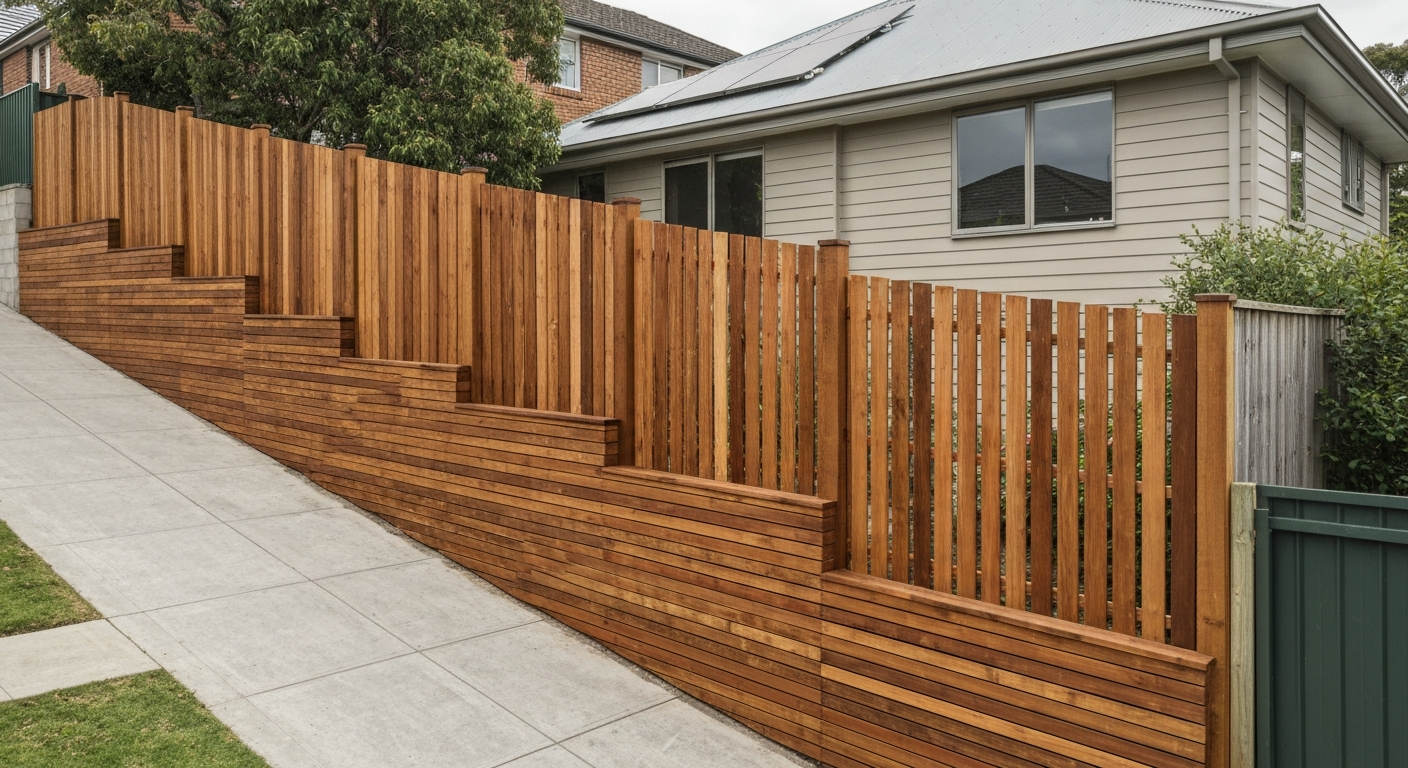
A fence company that takes backfill seriously will usually discuss compaction techniques and the worldly quality they make use of. You do not necessarily require to know the precise requirements, yet you need to be able to tell that they respect the interface in between message and ground.
Drainage: the undetectable root cause of leaning
Leaning fencings commonly resemble an attaching problem, yet water is normally the genuine wrongdoer. When water relaxes an article base, it softens bordering dirt, cleans fines away, and changes the mechanical buildings of the ground around the hardwood or metal.
Melbourne websites frequently have water drainage quirks, especially if the block has:
- downpipes that dispose near the fence,
- garden beds with overflow watering,
- slopes where water focuses along one line,
- stormwater adjustments from previous landscaping.
A Fence contractor Melbourne ought to look for water paths during the site stroll. If the ground is poorly drained pipes, the best practices shift towards boosting base stability and minimizing saturation.
This can consist of small modifications that have big results, like rerouting downpipe discharge, guaranteeing the ground slopes away from the fencing base where useful, and making certain the excavation and backfill don't leave a dish shape that holds water.
You can't constantly deal with water drainage by yourself block, but a great fence installer will a minimum of flag the threats prior to building starts.
Termites and dirt contact: style choices matter
Many homeowners in Melbourne know termites in general terms, yet fewer connect it straight to fence installation selections. With timber blog posts, the risk isn't simply whether termites exist close by, it's exactly how the fence is detailed and the length of time timber continues to be in contact with soil.
A solid fence company will certainly not deal with "wood article in ground" as an automatic default. They will consider choices like dealt with lumber specs, blog post choice, and just how much of the wood fencing post is revealed to soil contact.
Even when therapy is done appropriately, you still want audio construction. The very first aim is long life, and soil interaction is a huge part of that equation.
If you're comparing fencing contractors, it's fair to ask what hardwood they make use of, whether it is suitable for in-ground problems, and how they minimise unnecessary call between lumber and damp soil.
Corrosion and dirt chemistry: the metal side of the equation
For steel messages and cord systems, soil problems can influence rust price via moisture, salts, and oxygen schedule. Coastal impact and disturbed ground can change the chemistry. Even without obtaining extremely technological, a fence installer should comprehend that rust is not just "time plus weather condition," it's additionally "environment plus direct exposure."
Signs to expect throughout inspections of existing fencings include stressing at the base, corrosion discoloration that appears rapidly after installation, and quickly destruction near the message embedment zone.
If you're obtaining a fencing contractor for a steel-based fencing, ask them what they set up to stand up to rust in Melbourne problems, especially for anything in-ground. A respectable Fence installer Melbourne group must be able to describe coverings, galvanizing techniques, and exactly how they manage post-to-surface detailing.
A fast note on neighbour boundaries and sensible constraints
Local dirt influences more than engineering, it influences logistics. In tighter side lawns, you may have limited accessibility for equipment, which transforms just how deep you can dig and how easily you can compact backfill. Where there are origins, old concrete, or previous fence structures, the soil account can transform fast.
I have actually had tasks where the first two blog posts were simple, and then the 3rd hit a layer that was clearly disturbed fill. The entire plan changed right away. That's typical. The best service providers don't panic. They adapt, document what they find, and readjust their approach instead of requiring the initial plan to fit a truth that won't cooperate.
If your fence installer promises similar results along the whole run without acknowledging the opportunity of variable ground conditions, that's a red flag.
What an excellent website walk ought to look like
Before any type of excavating, I 'd expect a specialist fence contractor to take a correct appearance and ask a few practical inquiries. You do not require a long survey, yet you do desire them to show that they are thinking of the ground.
If you're working with fence contractors and you want a simple means to check whether they're doing it right, ask to see how they approach soil. The best installers will certainly speak about just how they examine ground security, drainage risk, and post support requirements.
To make it less complicated, here's a brief set of concerns that frequently disclose the difference in between a quality Fence company and a "conventional task" approach.
- How do you identify message deepness on my site?
- What product do you utilize as backfill, and do you compact it in layers?
- Do you put concrete, and what's the reason for your choice in my soil type?
- How do you evaluate water drainage at the post base and along the fencing line?
- What approach do you take if you strike disturbed fill, roots, or unexpected layers?
If the answers are vague, excessively confident, or disregard drainage and base stability, you may wish to maintain looking.
Common dirt issues that show up after installation
A fence can look great throughout construction and still stop working early since the dirt issues require time to share themselves.
A couple of patterns I've seen repeatedly:
When the ground compresses after rainfall, panels start to droop somewhat, and the post line looks discreetly out of placement. The repair isn't constantly "tighten the screws." Typically it's resetting blog posts, revamping base assistance, and improving exactly how water behaves around the embedment zone.
In reactive clays, you might see seasonal motion. A fencing can show up straight in summer and change after hefty wet durations. If you've ever before watched yard soil fracture in completely dry weather, you understand the basic concept, the dirt broadens and acquires as moisture changes. Fence messages behave similarly, particularly if their base is also superficial or if water remains caught at the base.
In disrupted fill, negotiation can be irregular. You may get one blog post that works out and another that doesn't. That produces a twist in the fencing line, and since fencings transfer tons side to side, the whole run can obtain managed geometry. That's why base preparation and backfill high quality matter also when the surface area looks level.
Quality materials matter, but setup details matter more
Homeowners occasionally get stuck on the visible products, the timber type, the colour of powder layer, the design of topping. Those issue, however soil-driven failure typically starts at the base.
If a fence installer gets the base incorrect, even premium materials can't completely compensate. On the other hand, a well-installed system in ordinary products can typically look terrific and continue to be steady longer than you 'd expect.
This is why the very best fence contractor Melbourne companies hang out on the components you can't see. They make sure with excavation high quality, they concentrate on article placement throughout embedment, and they take care of compaction and drainage.
If you're contrasting quotes, try to contrast the approach as well as the cost. 2 Fence firms could both price quote "established articles in concrete" yet indicate really different things in technique: just how deep they dig, whether they address gaps, exactly how they portable the backfill, and how they deal with the soil interface.
Practical "watch points" throughout installation
You don't require to supervise like a builder, but you can observe a few points that associate with a better outcome. The most effective fence installer welcomes concerns at these points.
Look for:
- clean, straight article positioning while concrete or backfill is still practical,
- consistent opening dimensions and uniform embedment depth,
- careful backfilling in compacted lifts (not just unloading and packing at the end),
- no organic particles hidden near the message base,
- sensible drain far from the article line where the site allows.
If you see backfill put loosely and left un-compacted, you're most likely heading toward negotiation later. If you see concrete poured without dealing with spaces or water paths, you might see cracks and movement.
A professional fence contractor won't sell you secret. They'll discuss what they're doing and why.
Getting long life from your fencing: maintenance and reality
Even a well-installed fence great soil will certainly experience wear. Melbourne climate cycles wet and completely dry periods, and wind loads do not quit even if the fencing is new.
But appropriate base installment reduces the amount of upkeep you need and slows down wear and tear. If you want to protect your investment, maintenance is simple:
- Keep plants and mulch away from the post bases so you're not capturing wetness against timber or metal.
- Watch for very early signs of movement after heavy rain. A tiny lean early is much easier to address than the same lean after the fencing has actually worked loose.
- Repair busted rails or bolts without delay. A loosened rail can increase leverage at the base.
- If your fencing is near downpipes or irrigation lines, guarantee water isn't being released directly towards the article embedment zone.
I've fixed several fencings where the "problem" was that water had actually been hitting the same post line season after period. Dealing with the water course minimized additional movement, and the fence secured without major rebuild work.
Choosing the right Fence installer for Melbourne soil
If you're picking between fence contractors, do not simply chase the lowest quote. Soil-specific ideal practices need to become part of the sales discussion, not an afterthought.
An excellent indication is when the fencing contractor talks about site variability. One more good indication is when they explain their strategy to base stability, drainage, and message support choices. The minute a fence company starts treating every yard the exact same, you're tackling risk that your ground will certainly not share.
Also pay attention to exactly how they react to unforeseen problems. When the soil profile adjustments mid-run, the top quality receives how they adapt and just how they keep the fence line straightened while doing it.
What you can get out of a well-executed soil-aware fencing job
When a fencing is installed with Melbourne soil in mind, the result is much less regarding best visuals on the first day and more regarding predictable behaviour over time. The fence line holds its geometry. Posts don't sink erratically. Panels don't loosen up because the ground does not maintain relocating under them.
The ideal Fence installer Melbourne groups additionally leave you with quality. They can clarify what they discovered, why they selected particular message depths or embedment techniques, and what maintenance pointers make sense for your details conditions.
That's the silent professionalism you desire from a Fence contractor, not simply the ability to establish blog posts paling fence quickly.
If you're preparing a brand-new boundary fence or changing a maturing one, treat soil as the major character of the project. When you select fencing contractors that respect regional ground problems, you're not just paying for products. You're buying stability, fewer repairs, and a fencing that acts like it should, long after the hype of the initial weekend has passed.